My Books Journey, past and future
If a write-up has a colored background, that book has a special place in my heart. I highly recommend it.
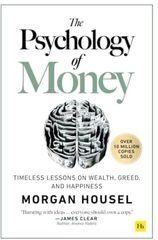
My first book: The Psychology of Money by Morgan Housel
Subject: Finance
This was the first book I read. It’s written in a very easy to understand way and provides invaluable, practical, and actionable advice on how we should think about money, happiness, and success.
It completely reshaped my thinking in many profound ways. Before reading this, I never realized just how valuable and life changing books can be, It’s amazing and at the same time keeps making me think, WHY WERE WE NOT TAUGHT THIS STUFF IN SCHOOL?
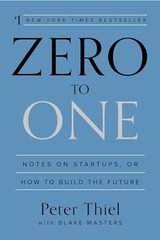
Second Book: Zero to One by Peter Thiel
Subject: Innovation and startups
This is one of the best books I’ve read on innovation, marketing, and strategy for finding new solutions. Thiel explores the mindset needed to build a successful company, emphasizing the importance of creating monopolies instead of competing, the role of sales and marketing, and, most importantly, how to go from 0 to 1, building something truly new
Third Book: Rich Dad Poor Dad by Robert Kiyosaki

Subject: Finance
In this book, you’ll learn the mindset to handle your personal finances, how to escape the rat race, and why giving is so important. It made me realize why focusing on learning and adding value to myself is crucial. There’s a lot more in this book that I wish I had known earlier
Fourth Book: How to win Friends and Influence People by Dale Carnegie

Subject: People management & Human nature
Hands down, one of the best books you’ll ever read on people management. This book will save you endless frustration and help you get people to see your viewpoint, not through manipulation, but by truly understanding human nature. It reveals the secrets of human relations, the power of seeing from the other person’s perspective, and why humility can be a superpower.
There’s a piece of wisdom Carnegie shared that I hold very closely:
“The reason why rivers and seas receive homage from hundreds of mountain streams is because they keep themselves below them”
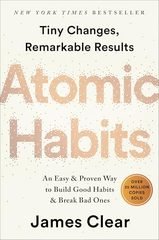
Fifth Book: Atomic Habits by James Clear
Subject: Habits
This is one of the finest pieces of text for building new habits and breaking bad ones. It provides a proven system that helps you reshape your life and align it with your goals.
James Clear talks about how designing your environment is crucial and why building a system that supports your goals is more important than the goal itself.
What I love about this book is how James explains everything with groundbreaking insights into the human mind and extremely valuable references. I’ve learned so much about how the human mind works, and honestly, every time I think about it, it’s astonishing.
Sixth Book: The Richest Man in Babylon by George S Clason

Subject: Finance
A profound book which sheds light on the ancient wealth creation mindset and strategies, this is the book which I’ve gotten my favorite piece of wisdom from, “Your actions cannot be wiser than your thoughts and your thinking cannot be wiser than your understanding”
George talks about giving yourself 10% of what you earn, what does that mean? Isn’t everything you earn basically yours to keep? Yes – but we pay to the electric supplier, we pay to the home owners, to the grocery store owners, to Netflix and more. George argues that we should be keeping 10% of our earnings and expand our knowledge to invest our savings smartly, not speculate, invest
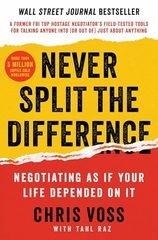
Seventh Book: Never Split the Difference by Chris Voss & Tahl Raz
Subject: Negotiation
Don’t ignore your ignorance. I’ve learned this the hard way and still struggle to accept that there is so much in life I don’t know, things that are crucial to achieving my goals. This book is a perfect example. At first glance, the title might not seem like it holds much value for your toolkit, but once you start reading, you realize how brilliantly Chris Voss explains one of the most challenging aspects of daily life, negotiation.
He introduces a structured system that begins with tone control, then moves to calibrated questions, mirroring, tactical empathy, labeling, the accusation audit, and summaries. This book is a must-read because negotiation is not just for high stakes deals. It is something we engage in almost every day.
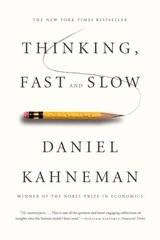
Eighth Book: Thinking Fast and Slow By Daniel Kahneman
Subject: Psychology & Decision making
In this book, I think the introduction doesn’t clearly tell the amount of value this will add to your life. It’s absolutely mesmerizing how Daniel breaks down complex concepts into easy to understand processes. System One and System Two, the fast and intuitive side of our brain and the slow, deliberate and analytical part of our mind.
There’s so much value in this book, starting from the introduction of crucial cognitive processes and focuses on cognitive biases, decision making, probability assignments, the neglect of base rates in decision making, one of the most effective technique to normalize your probability assignments. The planning fallacy, conjunction fallacy, over confidence, regression to the mean and so much more!!
Ninth Book: Lean Startup by Eric Ries

Subject: Innovation & startups
Ries talks about the fundamental techniques you need to know if you’re building a business, if you’re responsible for bringing innovative ideas to the table at your current company or if you’re interested in innovation yourself personally.
This books gives you the system you need to consistently build, measure and learn from your innovative ideas. How to not fall for vanity metrics, hold yourself accountable through innovation accounting, the minimum viable product and moreTeaches you concepts which will help you avoid a lot of the common pitfalls which one comes across while building a company, most importantly it’ll help you validate early, and would steer you in the direction to build something that someone actually wants rather then you investing your time, effort and resources building something no one wants
Special place in my heart · Highly recommended
Tenth Book: The subtle art of not giving a f**k by Mark Manson

Subject: Personal development
I believe this book is a mandatory read for everyone, the title itself doesn’t really do the justice for the content, the GOLD that this book is packed with. Talks about one of the most common problems “we” face, yes I quote “we” because if you’re going through something in your life, chances are there’s someone else going through the same challenges
One of the quotes that have struck me so far, and by the way, I’ve just read up until roughly 150 pages, is: Everything worthwhile in life is won by surmounting the associated negative experiences, any attempt to silence the negative, to quash it or ignore it, only back-fires
Just read something phenomenal, when I say just I mean at 2:10 PM Ish on 8/9: “Failure is the way forward”, sounds pretty cliche, but listen up
Our usual process to doing something is: We get inspired, then we muster up some motivation and then we finally do the action,
Mark suggests to reorient this mindset by “doing something”, yes it won’t be pretty, yes it won’t be fun, but yes you have to do something, and by doing “something” you will actually make a new loop which goes like:
Action -> inspiration -> motivation -> more action
I’ve just wrapped up this book last week, third week of August’25It wraps up by talking about our biggest fear, death, incase we’ve forgotten about it, it’s more certain to happen then almost anything else in life.
The point of talking about it is, that one of Manson’s friend, close friend, dies early in his life, leaving Manson traumatized, one day he comes in his dream and says “Why do you care that I’m dead, when you’re so scared to live?”, the author wakes up crying and since then he completely changes his life. He starts taking on new challenges, reads 50 self help book in 50 days and so on,
The lesson here is: You have one life, we all feel like we’re going through some special unique challenges in life, and that we’re limited because of those challenges. You need to ask yourself, what part of your life do you have control over, take full responsibility of all your actions and decisions. There’s no one coming to save you. Social media only broadcasts the best, which makes us afraid to even start. Remember, everyone starts somewhere and you cannot get good at anything by without going through the associated negative experiences
Do something, you have one life, one thing that starts creeping in as you age is, regret, regret that you didn’t pursue the things you thought were right or the things you were passionate about, you have a LOT of time to get stuff done, but it only starts when you start doing something about it, Goodluck!
Eleventh Book: The purple cow by Seth Godin

Subject: Marketing
I’ve just started reading this, it’s an interesting read, I want to learn more about marketing for my personal brand, I’m just figuring stuff out, so thought about reading this, let’s see, I’ll keep this updated as I read through, today’s 8/25/2025 around 3:35 PM, wish me luck!
Updating on 2/15/2026: This was a great marketing book, the strategies shared in this book were great, majorly it all comes down to being the “Purple” cow, which basically means standing out in the crowd. Doing something unique, making sure you’re thinking creatively and are giving your viewers a unique experience. A unique experience is something that no one else is doing. Have faith in your abilities and bring your creativity to the table, that’s the core message I got from this book
Twelfth Book: The Hard Things about Hard Things by Ben Horowitz

Subject: Entrepreneurship
I just completed this book today 2/14/2026 – It took way to long for me to finish this one but this has been truly worth the read. It’s a complete deep dive into a CEOs life that we all idealize, it’s not as straightforward as it seems from the outside.
What I really learned was that you have to be careful with thinking that running a business would be easier. It’s full of risks, but you need to have faith in your abilities. It talks a lot about the challenges that you will face as a CEO of a huge company. The book is really good, but it would be more valuable when the person reading it is running a company at the given time, and a big company, at least with 20 to 30 plus people. That’s just my take.
Thirteenth Book: Mindset by Carol S Dweck

Subject: Psychology & Personal Development
This is a strong read about the two mindsets, there is a fixed mindset and a growth mindset. Carol explains how both mindsets influence our lives, and how do you cultivate a growth mindset
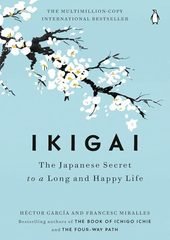
Fourteenth Book: Ikigai by Héctor García and Francesc Miralles
Subject: Longevity
The only reason you would want to live up till a hundred years is if you’re active. In this book, Héctor García and Francesc Miralles interviewed centenarians in Ogimi, Okinawa. The bottom line I learned from the book is that there is no such thing as retiring. People who live that long don’t retire. They keep themselves busy. They do Radio Taiso every day, and they drink a lot of green tea. Overall, you need simple food, you need to take care of your body by working out every day, you need to be a part of a community, you need to keep yourself engaged, and you don’t want to retire. So these were the bottom line items I learned from Ikigai.
Fifteenth Book: Who Moved My Cheese by Spencer Johnson

Subject: Change
Change is constant. We should not be constantly staying stuck with our current situation. We should always be open to changing because change is inevitable. In this story there are two humans and two mice. The humans started getting very attached to their belongings, so when things actually changed, when the cheese moved, they didn’t even know what to do or how to react. They kept pondering over what happened to them. The mice, because they don’t really have the human element, when they saw that the cheese had moved or they had run out of cheese, they literally just got out and went on to finding more cheese. The humans kept staying, kept pondering over what had happened and how they lost whatever they had. I think it’s a good book for somebody who needs to understand how to deal with change.
Special place in my heart · Highly recommended
Sixteenth Book: The Compound Effect by Darren Hardy

Subject: Compounding
That has been a very solid read. In this book, The Compound Effect, I have learned that compounding is a process that is like a water pump. Just like a water pump, you have to keep pulling the lever over and over again for the water to sprout out. If you stop at any given moment, you don’t just lose the progress you could have made during that break you took, you lose all the progress you’ve made up until that point. That’s why Hardy really emphasizes this. He says this is the secret of successful people: successful people have built systems that they repeat every single day, no matter if they’re able to see immediate results or not. Hardy argues that you need to keep doing what you think is right, even when it’s not showing meaningful results, even when you can’t see what you’re really getting out of it. You need to keep going, because that is just how compounding works.
He also shared an example of how if you take a penny and you double it every day for 31 days, it turns into $10,737,418.24. The penny doubling for the first week doesn’t seem significant until you see what the results are in the last couple of days, and then it’s just absolutely mind-boggling. And then he also says that while you’re compounding, if you put in a bit more work, that means if you double the penny four more times during those 31 days, that can turn into $171,798,691.84. So that’s what the point was.
Seventeenth Book: Everything is F*cked by Mark Manson

Subject: Personal development
The bottom line I learned from that book is that pain is an inevitable part of life. The attempt to quash it or mitigate it is a form of pain itself because you’re just delaying pain and it keeps accumulating over time. Pain is a part of life and we should build the character, the compassion and the discipline to accept it. We keep thinking we need to get rid of pain from our life, whereas pain is a constant, and the more we accept it and the lesser things we try to live with, the better off we’ll be.
Freedom is not having a million different choices. Freedom is having the ability to live on less choices, to not need a lot of variety. If I want cereal, choosing between 25 types is not more freedom than choosing one. That’s fake freedom. All we’re getting is variety of useless stuff. We need to live in a way that we don’t rely on a lot of variety, because that is how we actually achieve freedom. Any attempt to quash the pain or end it is a pain in itself.
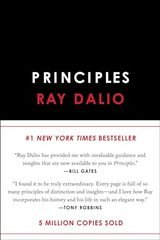
Eighteenth Book: Principles by Ray Dalio
Subject: Decision making
I’ve started to read Principles by Ray Dalio, Life and Work. The number one thing he is starting to talk about is that we make millions of decisions every day, and for those decisions we typically don’t have a system, a decision making process in our mind, or a systemized or computerized system. We make so many different decisions in our life and those decisions are the ones that basically steer where we go. He’s laying the foundation of how principles are absolutely necessary and important in order for us to be able to make decisions effectively, having a computerized system that makes decisions without emotion, and a natural system in our mind that we use to make decisions as well. That’s so far what I’ve learned.
I’ve also learned about futures, how companies can lock in futures contracts to lock in and make their costs more predictable. Ray Dalio talks about how he helped Lane Processing and McDonald’s. He got Lane Processing to do a contract for a fixed chicken cost by locking in corn and soymeal, the two ingredients you need to raise the chicken, as a futures contract. That let Lane Processing and McDonald’s do a deal and launch Chicken McNuggets in 1983.
The one thing that I learned is that you should have an issue log. I really like the issue log. If anyone on my team makes a mistake, they put their own issue in a sheet, an issue log themselves, rather than the managers trying to catch them. If you didn’t log it, you would be in deep trouble. This way, managers had problems brought to them, which was worlds better than having to seek them out. I really love this. Having a process that ensures problems are brought to the surface and their root cause diagnosed. I really like this one. I’m actually going to be implementing that in my team. I believe strongly that we should bring problems and disagreements to the surface to learn what should be done to make things better. So I really like that, and that is where the issue log is coming from. And then, making a handful of good unrelated bets that are balanced and leveraged well is the surest way of having a lot of upside without being exposed to unacceptable downside. Love that. The ability to figure things out is more important than having specific knowledge of how to do something. It seemed to Ray Dalio that young people were creating sensible innovation that was exciting; older folks who did things in the old ways held no appeal. So yeah, I really liked that. So that’s it. That’s my most recent learning.